How to Choose a Profitable Blog Niche in the USA (2026): The Complete Beginner's Guide

Not sure what to blog about? Learn how to choose a profitable blogging niche in the USA with a 3-part test, real income examples, and keyword difficulty ratings for every niche.
The Mistake That Kills Most Blogs Before They Ever Earn a Dollar
Ask any experienced blogger what the single biggest mistake they see beginners make and almost all of them will give you the same answer. It is not bad writing. It is not poor SEO. It is picking the wrong niche from the start, and then spending six months creating content nobody is searching for.
If you are sitting there right now wondering how to choose a blog niche for beginners you are already ahead of most people. Most beginners just start writing about whatever comes to mind and hope for the best. You are asking the right question before you invest weeks of your time.
Here is the honest reality: most blogs fail not because the writer is not good enough, but because the niche they chose was either too broad, too competitive, or had no real path to income. You can avoid all three of those problems with the 3-part test we cover in this article.
By the time you finish reading, you will have a clear framework for evaluating any niche idea, a shortlist of the most profitable blog niches in the USA for 2026, and a proven validation process that tells you whether your niche idea is worth pursuing before you write a single word.
⚡ What This Article Covers
- Why niche selection is the most important decision a new blogger makes
- The 3-part test every profitable US niche must pass
- The top 8 profitable niches for US bloggers in 2025 with affiliate income potential
- Why "picking an angle" beats picking a niche every time
- A step-by-step validation process before you commit
- Real income examples: how much can you actually earn?
- FAQ: the most common niche selection questions answered
Why Your Niche Is the Foundation of Everything
Your niche determines everything that comes after it. What you write about. Who reads it. What affiliate programs you join. What ads Google shows on your site. How much those ads pay. How easy it is to rank on Google. How quickly you build an audience.
A well-chosen niche makes every other decision easier. A poorly chosen niche means you are pushing uphill on every single thing — writing content nobody searches for, promoting affiliate products nobody wants to buy, and watching your traffic stats stay flat for months.
The two traps that catch most beginners are opposite extremes:
- The too-broad trap: Starting a blog about "travel" or "health" or "finance." These are categories, not niches. You are going up against sites with full-time writing teams, domain authority built over a decade, and millions of dollars in SEO investment. A new blog cannot compete there.
- The too-narrow trap: Picking something so specific — like "vegan recipes for left-handed chefs in Montana" — that there are not enough people searching for it to build real traffic or income.
The sweet spot is a specific enough niche that you can realistically rank on Google, with a large enough audience in the USA to generate meaningful traffic, and a clear path to affiliate income. That is exactly what the 3-part test below is designed to find.
The 3-Part Niche Test: Run Every Idea Through This
Before you commit a single hour of writing time to any niche, run it through these three questions. All three must pass. One failure does not mean the idea is dead — it means you need to adjust the angle.
TEST 1 — Is There Real US Search Demand?
This is the most fundamental check. If people are not actively searching for your topic in the United States, there is no organic traffic — and without traffic, there is no income.
How to check: Go to Ubersuggest (free — no account needed for basic searches). Type your niche topic. Set the location to United States. Click Keyword Ideas on the left sidebar.
What you are looking for:
- Monthly searches: 500–3,000 per month for your main keyword. Under 500 = too small. Over 10,000 = too competitive for a new blog.
- Keyword Difficulty (KD): under 30 for your starting keywords. Under 20 is ideal. Over 40 = established sites dominate and you cannot realistically compete yet.
- Multiple keyword variations exist — if only one keyword describes your niche, the topic is probably too narrow to sustain a full blog.
✅ Example that passes: "personal finance for teachers" — 800 searches/month in the US, KD 18. Specific audience. Low competition. Passes Test 1.
❌ Example that fails: "best restaurants in my city" — dominated by Yelp, Google Maps, TripAdvisor. Zero chance of ranking. Fails Test 1.
TEST 2 — Are There Affiliate Programs in This Niche?
Search traffic without a monetization path is just a vanity metric. Confirm that actual products or services exist that you can recommend and earn commissions on.
How to check: Type your niche + "affiliate program" into Google. Then search your niche on Amazon and count the relevant products with strong reviews. Also check ShareASale.com and CJ.com — both are large US affiliate networks where you can browse programs by category.
What you are looking for:
- At least 5 affiliate programs paying meaningful commissions in this niche
- Products on Amazon you could genuinely recommend in articles
- A mix of physical products (Amazon Associates, 1–10% commission) and digital products/services (SaaS tools, courses — often 20–50% recurring commission)
The best niches for affiliate marketing USA almost always have recurring commission opportunities — subscriptions, memberships, SaaS tools. These pay you every month a reader stays subscribed, which is what creates true passive income over time.
TEST 3 — Can You Write 20+ Articles Without Running Dry?
A blog is not one article. It is a content library that grows over time. Google rewards sites that cover a topic comprehensively — multiple articles that link to each other and cover every angle of a subject.
Open a blank document right now and write down 20 article ideas for your niche. Do not filter yourself — just write. If you struggle to reach 10, the niche is probably too narrow. If you reach 30 and keep going, you are in excellent shape.
Aim for a mix of:
- Informational articles ("how to", "what is", "why does") — these build traffic
- Comparison articles ("X vs Y", "best X for Y") — these convert readers into buyers
- Problem-solving articles ("how to fix", "reasons why") — these attract buyers with urgent needs
✅ Quick Test Summary
- Test 1 — US Search Demand: 500–3,000 monthly searches, KD under 30 on Ubersuggest
- Test 2 — Affiliate Programs: 5+ programs, mix of physical + digital products
- Test 3 — Content Depth: You can brainstorm 20+ unique article ideas right now
All three must pass. If one fails, adjust your angle — do not abandon the general area.
The Top 8 Most Profitable Blog Niches for US Bloggers in 2026
These are the most profitable blog niches in the USA based on US search volume, affiliate income potential, and realistic ranking difficulty for new blogs.
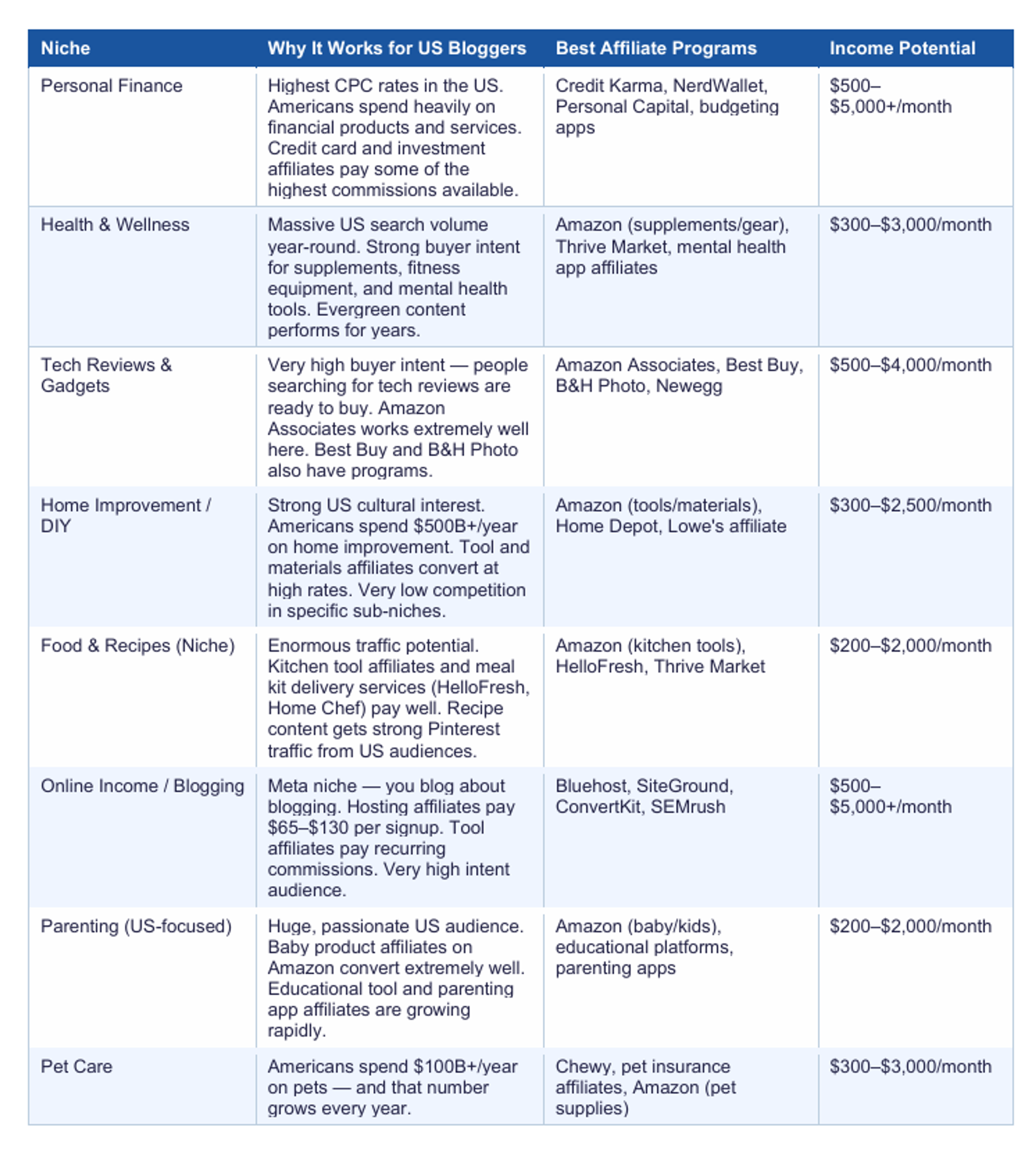
A note on the personal finance blog niche USA: it is genuinely the highest-earning niche for US bloggers — but also one of the more competitive ones. If you go into personal finance, you need a very specific angle. The income ceiling, however, is higher than almost any other niche on this list.
For the health and wellness blog niche for Americans: the key is specificity. "Health" is too broad. "Gut health for American women over 40" or "managing anxiety without medication for US adults" are the kinds of specific angles that rank and earn.
The Blog Niches With the Highest CPC for US Traffic
CPC stands for Cost Per Click — the amount advertisers pay Google every time someone clicks their ad. Blog niches with high CPC for US traffic earn significantly more from display advertising than low-CPC niches, even with the same amount of traffic.
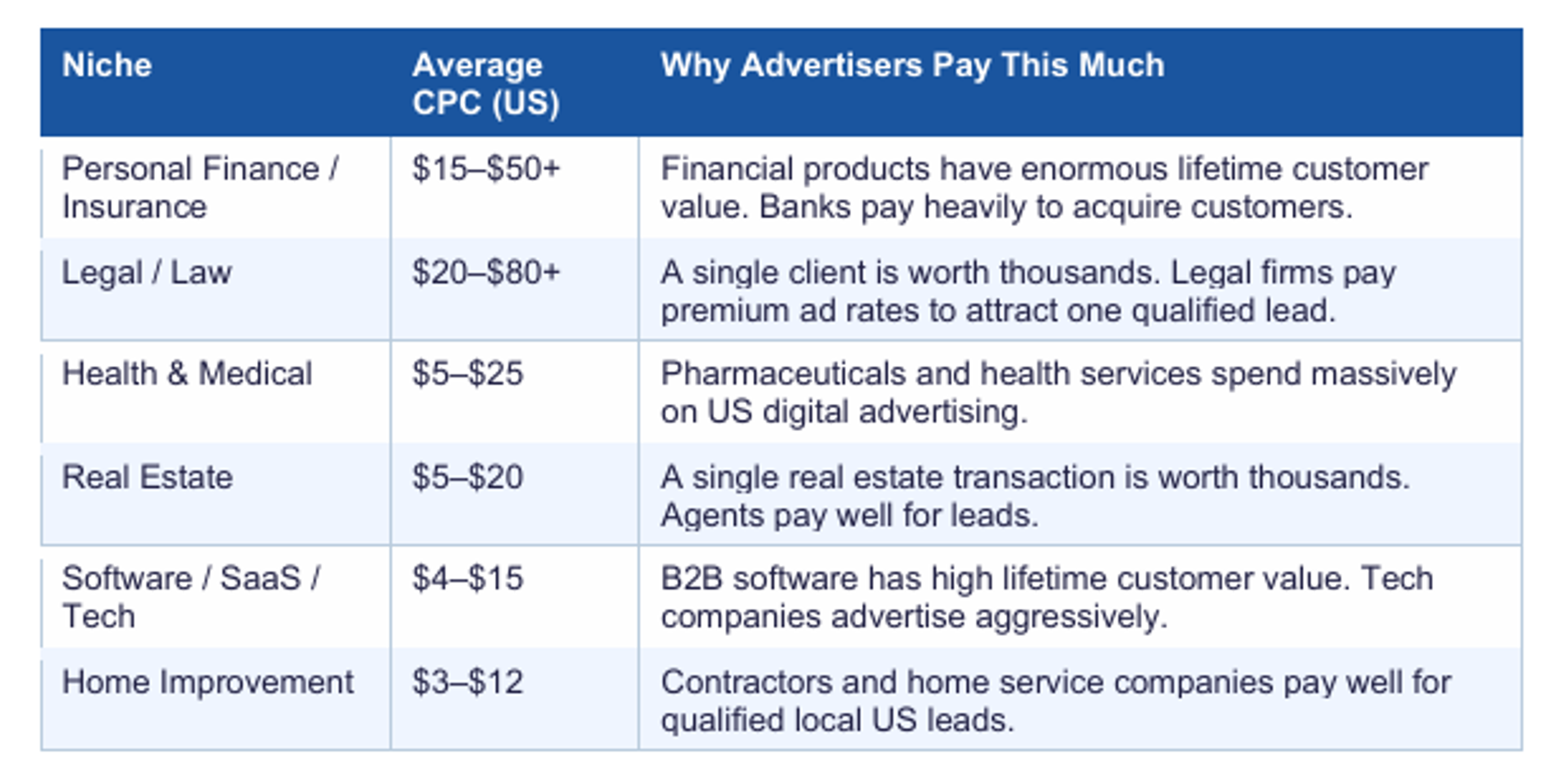
This matters because even at low traffic levels (5,000–10,000 monthly page views), a personal finance or legal blog earns 3–5 times more from display ads than a general lifestyle blog with the same traffic. Combined with affiliate income, high-CPC niches compound your earnings significantly.
Underserved Blog Niches in 2026 — Where New Blogs Still Win
Some of the best opportunities for new US bloggers right now are in underserved blog niches 2025 — specific areas where demand is growing but quality content is still thin. These are areas where a well-written blog can rank on page one of Google within 3–6 months:
- Caregiver resources for aging parents in the US — massive growing demand as baby boomers age, very little quality content
- Financial planning for US military families — specific audience, specific needs, strong affiliate potential
- Plant-based eating on a budget for American families — combines food + finance, strong Pinterest traffic
- Side hustles for teachers in the US — passionate, specific audience, multiple affiliate opportunities
- Mental health resources for American men — growing awareness, low content quality currently, strong search demand
- Homesteading for US suburban families — exploding interest post-pandemic, YouTube and Pinterest traffic potential
What makes these niches interesting is not just the lack of competition — it is that the audiences are hungry for good information and tend to be very loyal readers. When you serve a specific, underserved US audience well, they come back again and again, they share your content, and they buy what you recommend.
Do Not Pick the Niche — Pick the Angle
This is the most valuable piece of advice in this entire article, so read it slowly.
The problem with choosing a niche is that even a "good" niche like personal finance or health is still too broad for a new blog to compete in. What actually works is choosing a specific angle within a niche — a particular audience, a particular problem, a particular demographic — and owning that angle completely.
Think of it this way: there are thousands of personal finance blogs. There are very few blogs specifically about budgeting on a teacher's salary in the USA. The broad niche is crowded. The specific angle has room to breathe — and it attracts readers who feel like the blog was written exactly for them.
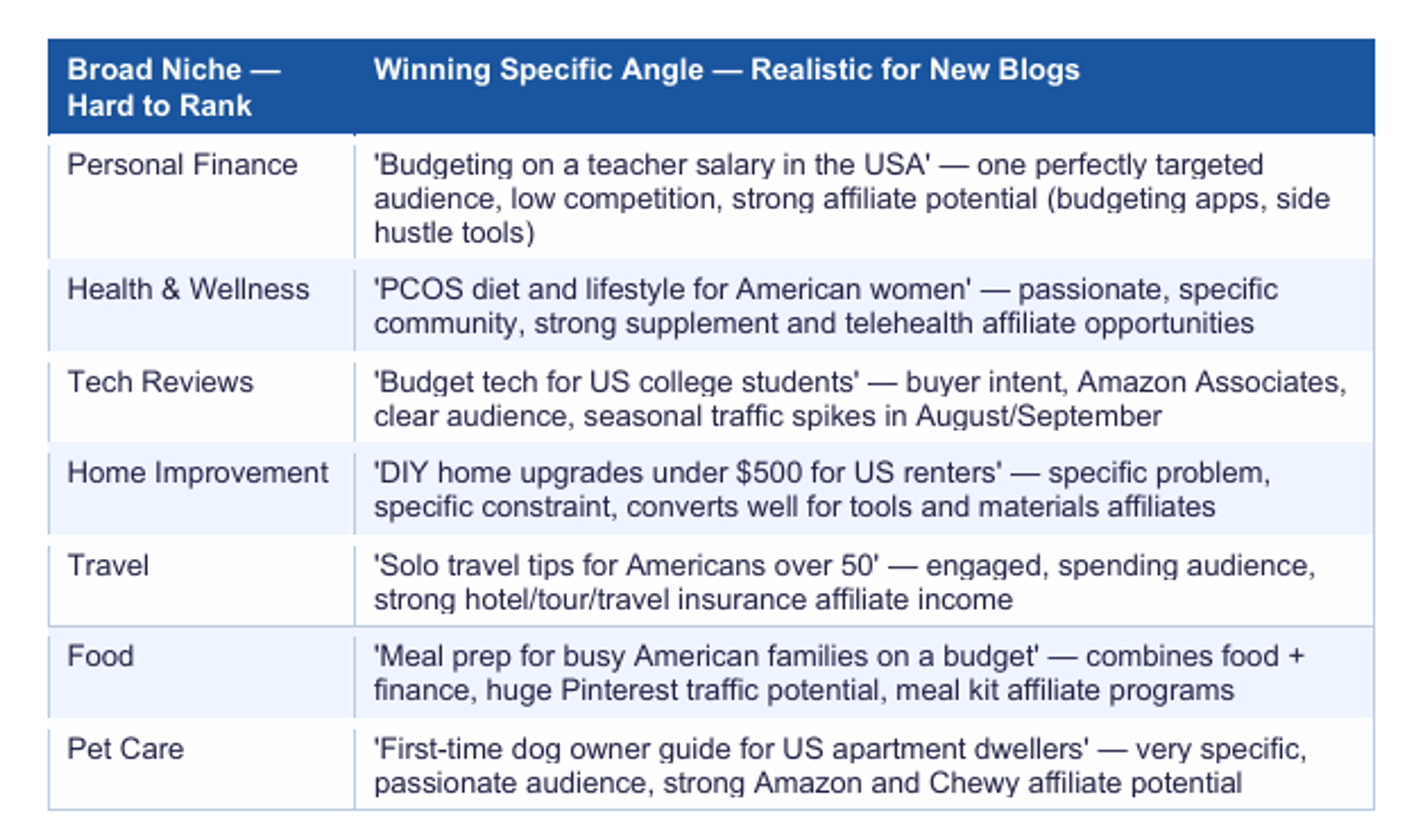
Notice the pattern: every winning angle has three things — a specific audience, a specific problem or constraint, and a geographic signal (USA, American, US). That combination is what makes an angle rankable, relatable, and profitable.
💡 The Angle Formula for US Bloggers
My blog helps [specific US audience] [solve specific problem] [under specific constraint or context].
Examples:
- "My blog helps American teachers budget their salary and build savings on a limited income."
- "My blog helps US apartment renters make home improvements without losing their security deposit."
- "My blog helps first-time American dog owners raise healthy, happy dogs in small living spaces."
Write your version of this sentence before you buy a domain name. If you cannot write it clearly, your angle is not specific enough yet.
How to Validate Your Niche Before You Start Writing
Do not start writing articles until you have validated your niche. This is your niche selection checklist for bloggers — a 30-minute process that tells you whether your idea is worth pursuing before you invest weeks of your time.
Step 1 — Search Your Main Topic on Google
Open Google and search your primary niche keyword. Look carefully at the top 5 results. Ask yourself:
- Are they from giant established media sites like Forbes, WebMD, or Healthline? If yes — your angle is probably too broad. Narrow it.
- Are any of the top 5 results from smaller personal blogs or newer sites? If yes — that is your green light. It means Google is willing to rank new, specific content in this space.
- Is there a "People Also Ask" box on the page? Those questions are keyword ideas for your first articles — write them down right now.
Step 2 — Check Keyword Difficulty for Low Competition Blog Niches
Go to Ubersuggest (free), type your niche keyword, set location to United States. Look at the KD score.
For low competition blog niches for beginners: you are looking for a KD score under 30 on your main keyword AND a cluster of related keywords also under 30. If your main keyword is 25 but all related keywords are 50+, the niche is harder to break into than it looks.
Step 3 — Search Amazon for Products in Your Niche
Go to Amazon and search for products related to your niche. Count how many results come up with strong reviews (4+ stars, 500+ reviews). If you can find 20+ products you could genuinely recommend in articles, your Amazon Associates income potential is solid.
Also check: do any of these products have a higher price point ($50+)? Amazon pays 1–4% on most categories, so higher-priced products earn meaningfully more per sale.
Step 4 — Look for Active Communities
Search your niche on Reddit, Facebook Groups, Pinterest, and YouTube. You are looking for:
- Reddit communities with 50,000+ members actively asking questions (those questions = your article ideas)
- Facebook Groups with engaged US members posting regularly
- Pinterest boards with millions of pins and active re-pinning
- YouTube channels with 100,000+ subscribers covering your niche topic
Active communities mean your niche has passionate, engaged readers — people who are deeply interested in the topic, not just casually curious. Passionate readers share content, return repeatedly, and buy things.
Step 5 — Count the Affiliate Programs
Search: [your niche] + "affiliate program" on Google. Write down every program you find. Then browse ShareASale.com by category and count the programs in your niche.
You want a minimum of 5 affiliate programs with decent commission rates. Ideally a mix of:
- Physical product affiliates (Amazon, niche-specific stores) — lower commission rates but high conversion
- Digital product affiliates (software, courses, apps) — higher commission rates, often recurring
- Service affiliates (financial services, insurance, legal services) — can have very high payouts per lead
✅ Your Niche Validation Checklist — Run This Before Committing
- ☐ Google top 5 shows at least some smaller blogs ranking (not all mega-sites)
- ☐ Main keyword has 500–3,000 US monthly searches on Ubersuggest
- ☐ Keyword Difficulty (KD) is under 30 on Ubersuggest
- ☐ 20+ Amazon products with strong reviews exist in this niche
- ☐ Active Reddit community or Facebook Group with US members
- ☐ 5+ affiliate programs found — mix of physical, digital, and services
- ☐ I can write 20 article ideas in 10 minutes without struggling
- ☐ I have a specific angle written out using the angle formula above
How Much Money Can You Actually Make Blogging in a Niche?
How much money can you make blogging in a niche? This is the question everyone wants answered honestly. Most blogging content either overpromises ($10,000 in your first month) or underpromises (it takes years and you might never earn much). The truth is in between — and it depends heavily on your niche choice.
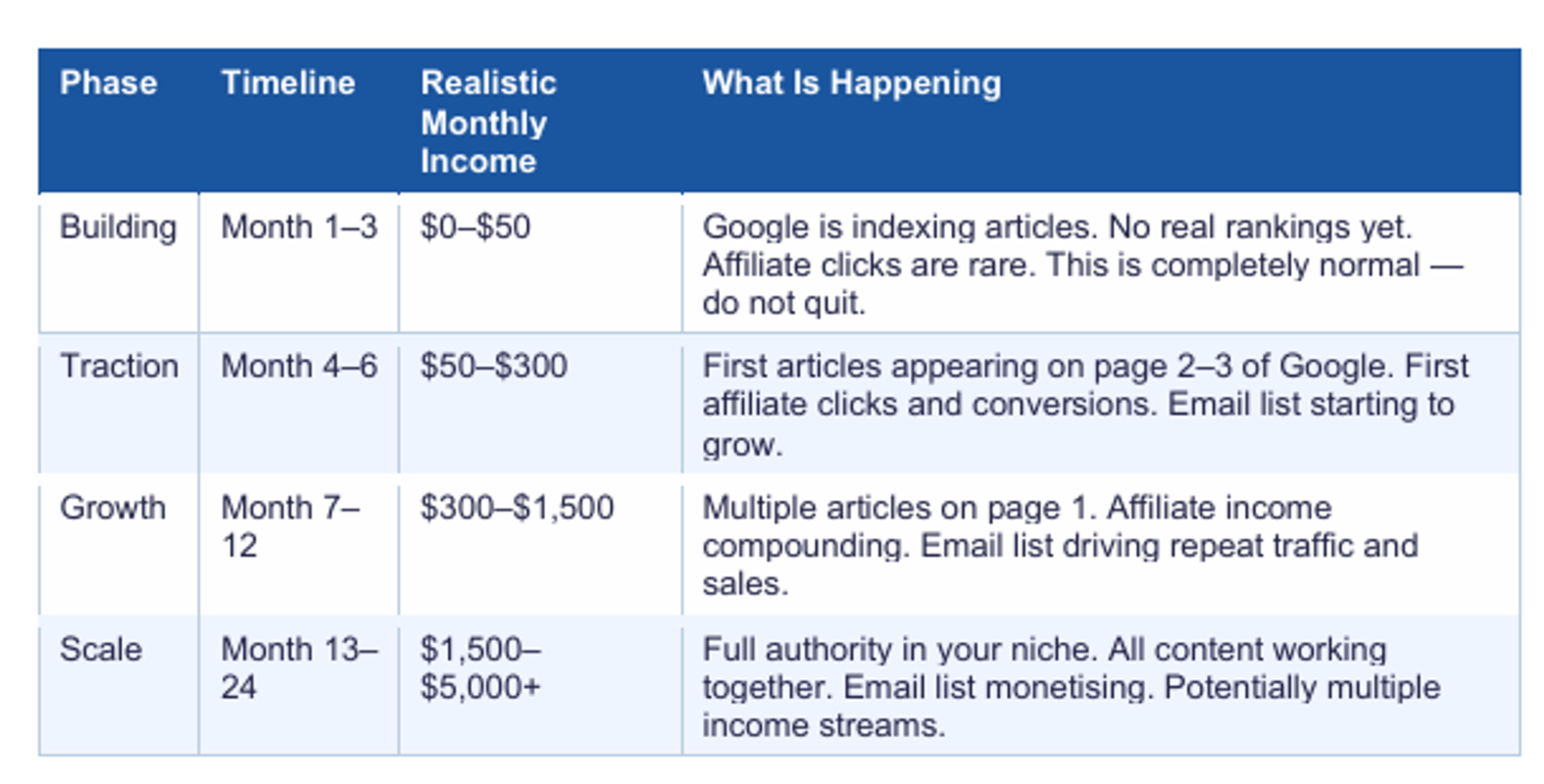
The niches with the highest income ceilings are personal finance, tech reviews, and online income/blogging. The niches with the most accessible entry points (easiest to rank, fastest to first dollar) are food, parenting, and pet care.
The most important variable is not the niche itself — it is whether you chose a specific enough angle and whether you publish consistently. A blogger in any of the eight niches above, publishing one well-researched article per week, can realistically reach $500/month within 12–18 months.
Frequently Asked Questions About Blog Niche Selection
What is the most profitable blog niche in the USA right now?
Personal finance consistently generates the highest income for US bloggers — largely because of the extremely high CPC rates for US finance-related keywords and the generous commissions paid by credit card, investment, and insurance affiliate programs. However, it is also more competitive than most other niches. If you are a complete beginner, starting with a specific angle within personal finance (like budgeting for a particular profession or life stage) gives you a more realistic path to ranking.
Can I blog about multiple niches?
Not on the same blog — at least not when starting out. Google ranks topic authority, meaning it ranks sites that cover one subject comprehensively over sites that cover many subjects shallowly. A blog about personal finance for teachers will outrank a blog that covers finance, travel, food, and parenting all at once — even if the multi-topic blog has more total articles. Pick one niche and go deep.
What if my chosen niche is already competitive?
Narrow your angle. Almost no niche is too competitive if you pick a specific enough sub-angle. "Health and wellness" is fiercely competitive. "Gut health for American women over 40 dealing with perimenopause" is a niche where a new blog can rank. The audience is still large enough to build meaningful traffic — you are just reaching them through a more specific door.
Do I need to be an expert in my niche?
No — but you need to be willing to research thoroughly and document your learning honestly. Some of the most successful US bloggers started as complete beginners in their niche and built authority by sharing their research and experience as they learned. The "documenting the journey" approach works extremely well because readers see themselves in someone who is figuring it out in real time.
Read These Next
- → "Keyword Research for Bloggers: Find Low-Competition Keywords" — now that you have chosen your niche, this shows you exactly which specific keywords to target first and how to find them using free tools.
- → "Blog Setup Checklist: Domain, Hosting & First Steps" — if you have not set up your blog yet, this step-by-step checklist gets you live in one afternoon.
- → "How to Start a Blog and Make Money in 2026: Complete Guide" — your full roadmap from niche selection to first dollar, all in one place.
About the writer

Writer
Imesha is a Software and EdTech Specialist for EveryTuesdays. She covers software and mobile development, artificial intelligence, personal development, book reviews, and actionable digital learning guides to help readers upskill.
You May Also Like
Browse All
Blog SEO Optimization: The Complete Beginner's Guide to Ranking on Google (USA 2026)
Learn blog SEO optimization step by step. This guide covers title tags, keyword placement, internal linking and US ranking tips for beginner bloggers

How to Set Up a Blog in the USA (2026): The Complete Step-by-Step Checklist for Beginners
Want to set up a blog in the USA but not sure where to start? Follow this step-by-step checklist domain, hosting, WordPress install, plugins and Google tools get live today.

Best Blogging Platform for Beginners in the USA (2026): Which One Actually Makes You Money?
Trying to pick the best blogging platform for beginners in the USA? We compare WordPress, Medium, Substack and Ghost — so you can choose the right one and actually earn money from your blog.